This is a summary of my article published in Infection Control Today. Read the full article with references.
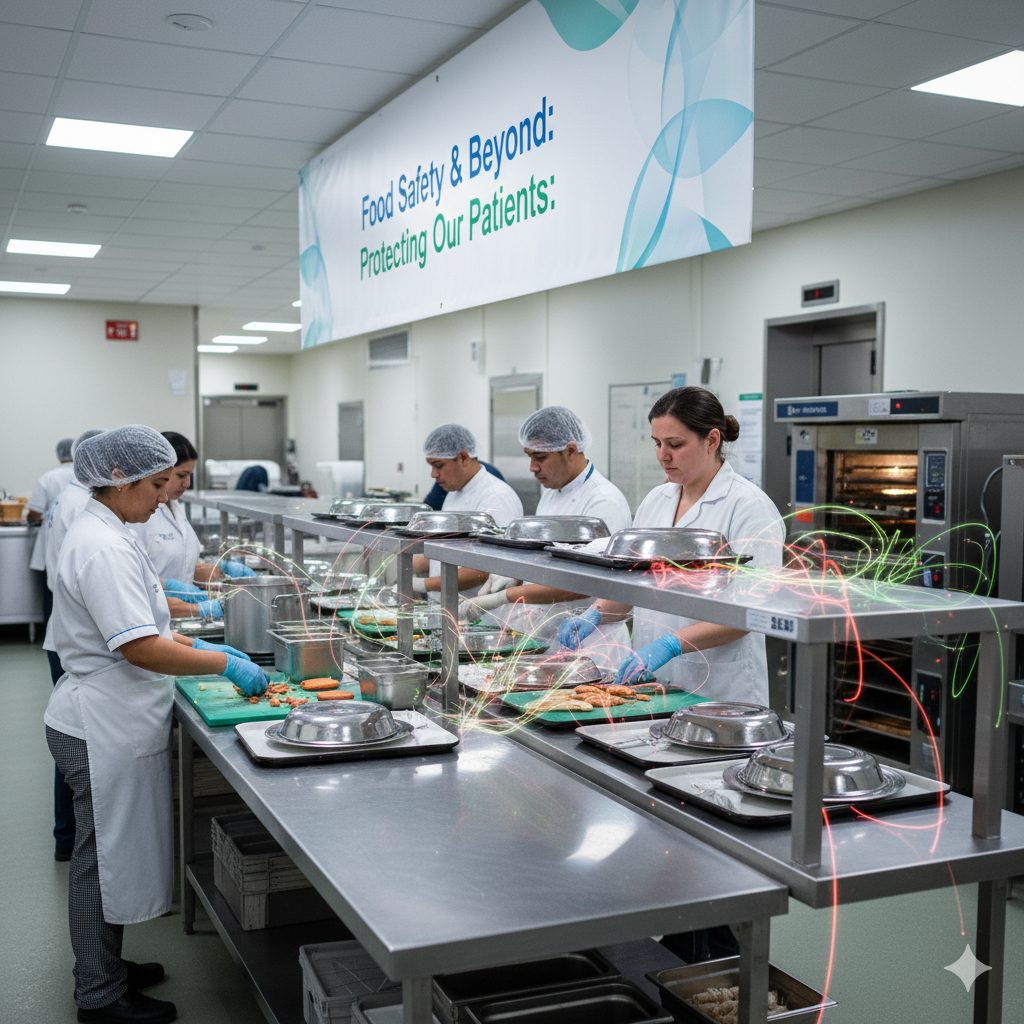
Hospital meal trays are often overlooked in infection prevention discussions. Yet each tray, from assembly to delivery, passes through multiple hands, surfaces, and transport carts. Lids, handles, utensils, and the carts themselves can carry microbes from one area to the next, turning a routine process into a possible path for harmful pathogens.
Food safety training covers only part of the risk
Many hospitals rely on ServSafe certification to train foodservice staff in safe food handling, cooking temperatures, and preventing foodborne illness. That training is essential, but it does not fully address healthcare-associated pathogens such as MRSA. Foodservice teams also need the environmental hygiene and handling practices that the rest of the hospital follows.
Five ways to make the tray line safer
- Enhanced cleaning and disinfection of tray carts, lids, and utensils.
- Hand hygiene checkpoints for staff handling trays.
- Dedicated transport routes that keep foodservice traffic apart from clinical areas where possible.
- Infection prevention content added to ServSafe or internal certifications to cover healthcare-specific pathogens.
- Fewer cross-touch points through tray line design and workflow changes, including automated or touchless steps.
Even small changes, like reorganizing tray line flow, staggering shifts, or adding routine disinfection checks, can meaningfully reduce risk. The tray line is more than a logistics problem. It is part of the hospital’s infection prevention front line.
Read the full article in Infection Control Today.
Image is AI-generated.