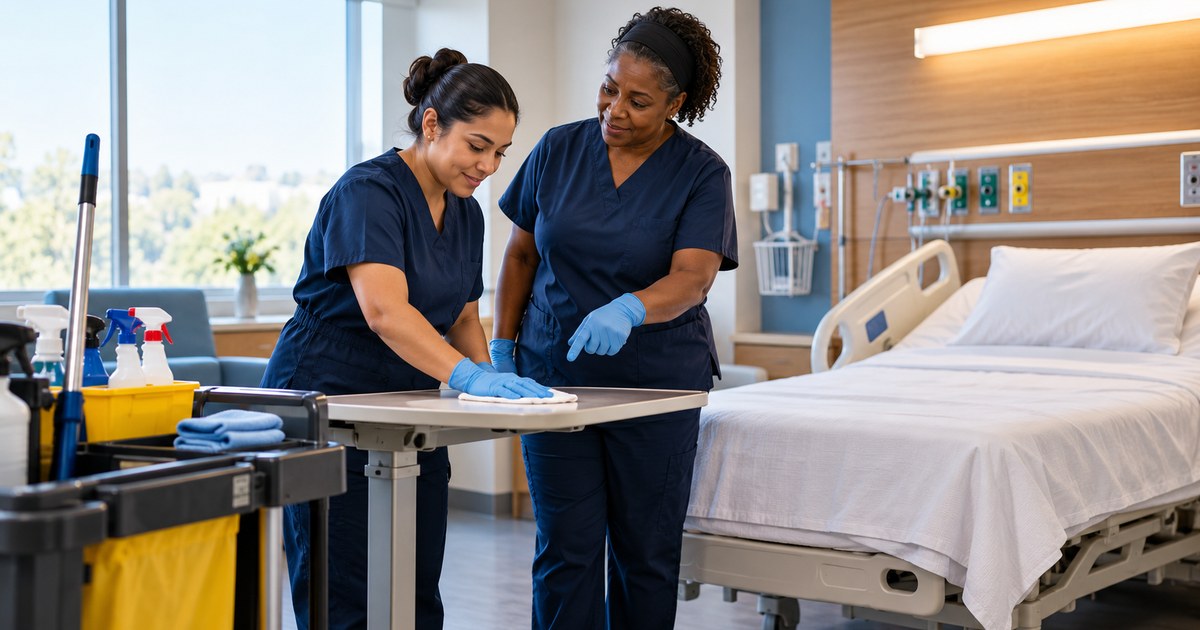
Environmental services (EVS) teams shape the safety, readiness, and experience of every hospital unit. Onboarding that ends with a policy packet leaves too much to chance. A useful plan explains the work, shows it in the actual care environment, and verifies that the new colleague can perform it consistently.
Hospital protocols differ by facility. Use this checklist as a planning framework, then align each step with your infection prevention guidance, equipment, cleaning products, and unit workflow.
Week one: understand the environment
- Role and relationships: Explain how EVS coordinates with nursing, bed management, transport, and infection prevention.
- Local safety rules: Review required protective equipment, product instructions, contact times, waste streams, and escalation procedures with the appropriate facility leaders.
- Room types: Walk through occupied-room care, discharge cleaning, public areas, and any specialty spaces the colleague will serve.
- Communication: Practice announcing arrival, protecting privacy, reporting a room's status, and flagging a barrier to completion.
Weeks two and three: demonstrate the work
Pair the new team member with an experienced trainer. Observe the complete sequence on representative rooms: preparation, cleaning, equipment care, final check, and status handoff. Use the same checklist for coaching and for the final competency review. This makes the standard understandable and helps supervisors see where the process breaks down.
Pay close attention to handoffs. A clean room is useful to patient flow only when its status is communicated accurately and the next team can act. If bed management, nursing, and EVS use different definitions of “ready,” delays can persist even when cleaning time improves.
After onboarding: verify and refresh
Schedule a follow-up observation after the colleague begins independent work. Look for consistent technique across shifts and room types, then coach specific gaps. Refresh the plan when products, equipment, workflows, or facility guidance change. Documentation should show what was taught and what was observed, rather than simply that a form was signed.
Keep the checklist local. The right sequence and technical requirements come from your hospital's approved procedures and infection prevention team. The framework above helps make those requirements teachable and observable.
Support the team beyond the checklist
Professionalism, communication, and workplace readiness deserve as much attention as task steps. Impact Training Online's environmental services pathway provides self-paced learning for frontline professionals and leads. Hospitals that need to diagnose wider room-turnover or support-services bottlenecks can explore Impact Training Company's operational assessment and consulting work. Start with the needs in your own facility, then connect training to field verification.