Flow Physics Library
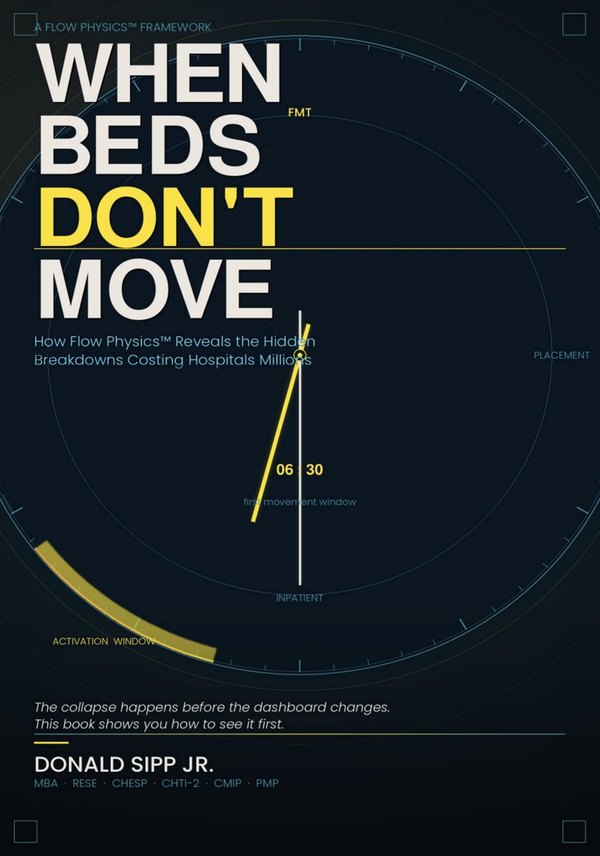
When Beds Don't Move
Why hospitals gridlock, and what to do about it. The book reframes patient flow as a system with physics of its own: queues, bottlenecks, and cascading delays that behave by rules you can learn. It makes the case that support services, transport above all, are the highest-leverage fix hiding in plain sight, and gives leaders the framework to act.
Why it matters: every boarding hour in the ED, every late OR start, every discharge that slips to tomorrow traces back to a flow event someone could have engineered. This book teaches you to see them.
Buy the paperback Kindle edition The Store Read a free sample
"His ability to connect operational efficiency with patient outcomes is what sets him apart."
Antoinette "Toni" Watkins, MS, RDN, System Director of Food, Nutrition & Environmental Services, Riverside Health System, from the foreword
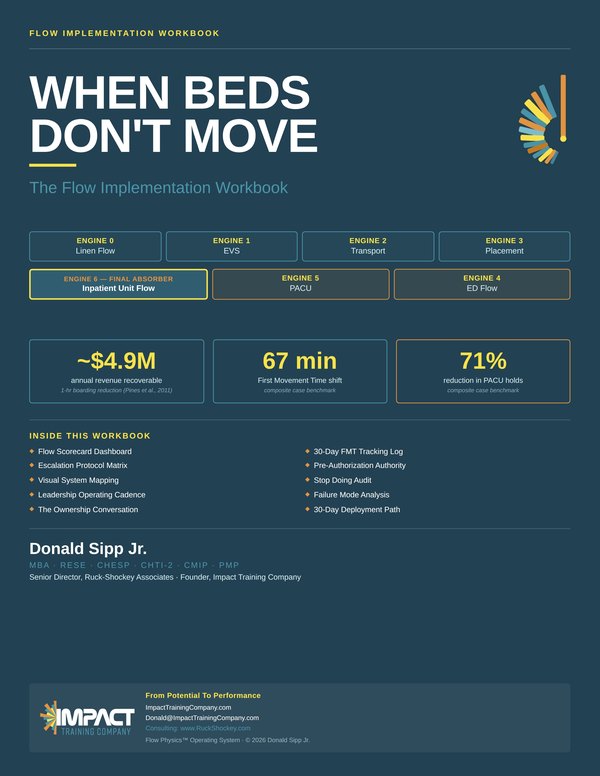
The Flow Implementation Workbook
The implementation companion: facility assessments, flow-mapping exercises, and action-planning tools that turn the book's framework into a working program at your hospital. Built for leaders who read Book One and asked, "Monday morning: where do I start?"
Companion resources: pairs with the consulting practice and the CHT credential pathway for teams ready to go further.
When X Stops Flow
Your hospital runs on seven operational engines, numbered 0 through 6: from linen, where flow begins before the room, through EVS, transport, and beyond. Each companion volume takes the When Beds Don't Move framework deep into one engine: the signal to watch, the failure pattern, and what leadership does about it.
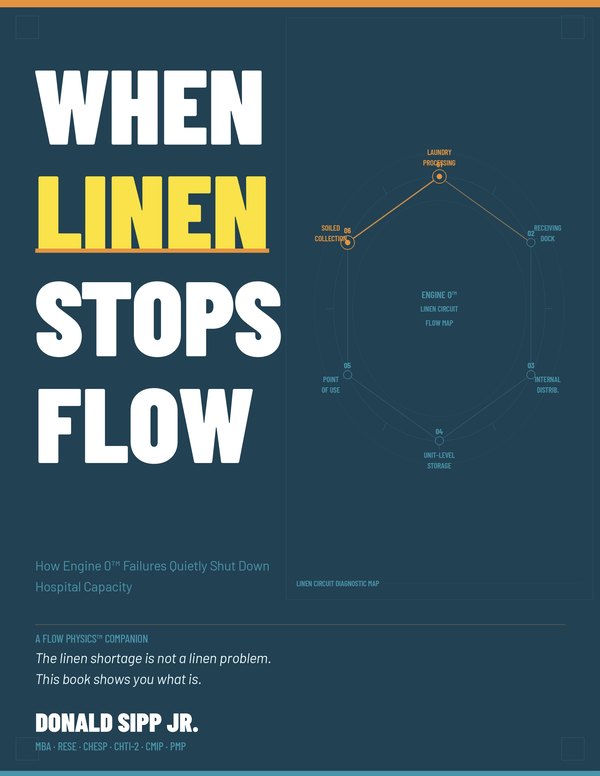
When Linen Stops Flow
The engine no one names in the command center. Flow begins before the room, and when linen stalls, capacity quietly shuts down floors away from where anyone is looking. The linen shortage is not a linen problem; this book shows you what it is.
When EVS Stops Flow
Environmental services as a flow engine: why the turnover clock starts long before the page goes out, and what the bed board never shows.
When Transport Stops Flow
The highest-leverage engine in the building, and the profession behind it. The framework applied to the flow event hospitals feel most.
When Pests Stop Flow
The engine nobody plans for until it closes a unit. Integrated pest management as flow protection, not facilities housekeeping.